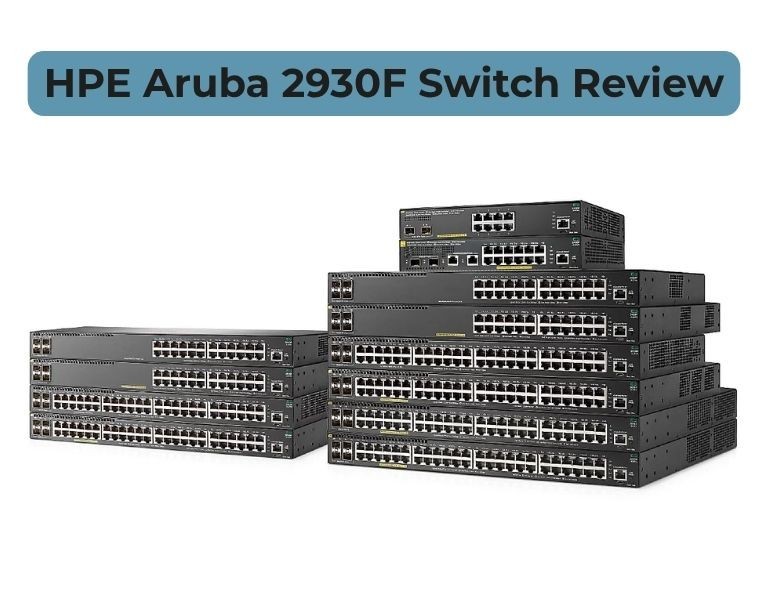
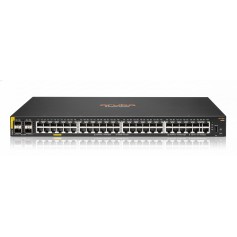
HPE Aruba 2930F Switch Review: Still a Good Choice in 2026?
Legacy access switch review: value vs modern alternatives
Introduction
If you're considering the HPE Aruba 2930F in 2025, the real question is: does it still make sense to deploy a legacy switch when newer CX models exist?
Short answer — only in specific scenarios like budget refreshes or existing ArubaOS environments.
The 2930F is still reliable and functional for access-layer deployments, but it is based on older architecture and software (ArubaOS-Switch). For new deployments, it is no longer the first choice.
Quick Answer (Featured Snippet Target)
Is HPE Aruba 2930F still a good switch in 2026?
Yes, for budget-conscious access layer deployments or existing Aruba environments.
No, for new enterprise networks where modern CX switches offer better performance, automation, and long-term support.
Technical Breakdown
Performance
The 2930F delivers stable access-layer performance but is limited by older hardware.
- Up to 176 Gbps switching capacity
- Up to 112 Mpps forwarding rate
- Sub-4 µs latency at 1G
In real deployments:
- Handles VoIP, Wi-Fi, and user traffic reliably
- No major bottlenecks at standard access layer
But compared to CX:
- Lower scalability
- Less efficient ASIC design
Deployment Use
Best suited for:
- Access layer in SMB and enterprise
- Branch offices
- Legacy Aruba environments
Not ideal for:
- Modern campus builds
- High-density Wi-Fi 6/6E environments
- Automation-driven networks
Features & Capabilities
- Layer 3 Lite (static, RIP, access OSPF)
- VSF stacking for scalability
- PoE+ support up to 740W
- 10G SFP+ uplinks
These features are still usable, but not competitive with modern switching platforms.
Software Limitation (Key Issue)
This is the biggest drawback.
The 2930F runs on ArubaOS-Switch (ProVision):
- CLI-driven
- Limited automation
- No modern telemetry or analytics
Compared to AOS-CX:
- No Network Analytics Engine
- Limited API capabilities
- Less visibility into network behavior
From field feedback:
“AOS-S switches offer features, but they may not play nice together”
That reflects real-world operational friction in complex setups.
Lifecycle & Future Risk
This is where most buyers underestimate the risk.
- Still not fully EOL, but approaching lifecycle limits
- Aruba is clearly shifting to CX platform
From community insight:
“All the 'current' switches are running CX… 2930s are coming to an end”
Meaning:
- Limited long-term roadmap
- Future firmware/security support uncertainty
Comparison Table
| Feature | Aruba 2930F | Aruba CX 6200 |
|---|
| Performance |
Good |
Higher |
| Reliability |
Proven |
Strong |
| Management |
CLI-based |
Cloud + API |
| Scalability |
Limited |
Better stacking |
| Power / Efficiency |
Moderate |
Improved |
| Warranty |
Limited lifetime |
Limited lifetime |
| Price Range |
Low (used/refurb) |
Mid-range |
| Best Use Case |
Legacy access |
Modern access |
| Business Size |
SMB / legacy enterprise |
SMB to enterprise |
Pros and Cons
Pros
- Proven reliability (many run 10+ years)
- Affordable in secondary market
- Solid PoE+ support
- No licensing complexity
Cons
- Legacy OS (AOS-Switch)
- Limited automation and visibility
- Approaching lifecycle limits
- Not ideal for modern network design
Aruba CX 6200 (Modern Alternative)
Pros
- Modern OS (AOS-CX)
- Better automation and telemetry
- Higher performance
- Long-term support
Cons
- Higher upfront cost
- Learning curve for legacy teams
Procurement Insight (B2B-Focused)
When to Buy 2930F
- You already run ArubaOS-Switch across network
- Budget is extremely tight
- You need reliable access switching with minimal features
- You are buying refurbished hardware
When NOT to Buy
- New enterprise deployment
- Long-term infrastructure planning (3–5+ years)
- High-density wireless or IoT networks
- Automation-first environments
Budget vs Performance
2930F is cheap — but that’s the main advantage.
- CapEx: Low
- OpEx: Can increase due to manual management
Long-Term Cost (TCO)
Hidden costs matter:
- More manual troubleshooting
- Limited automation = higher operational effort
- Potential earlier replacement cycle
Real-World Use Cases
1. Small Office (20–50 Users)
- Basic switching + PoE
Outcome: Reliable, cost-effective
2. Legacy Enterprise Network
- Extending existing ArubaOS deployment
Outcome: Seamless compatibility
3. Budget-Constrained Deployment
- Refurbished hardware rollout
Outcome: Acceptable short-term solution
Final Recommendation (No BS)
Choose Aruba 2930F if:
- You are extending an existing ArubaOS-Switch network
- Budget is the primary constraint
- You need simple, stable access switching
Avoid Aruba 2930F if:
- You are building a new network in 2025
- You need automation, analytics, or cloud-first management
- You want long-term infrastructure investment













Comments (0)
No comment