HPE Aruba Instant On Switches Review: Best Switch for Small Businesses?
Small business switch review: performance, ease, and value
Introduction
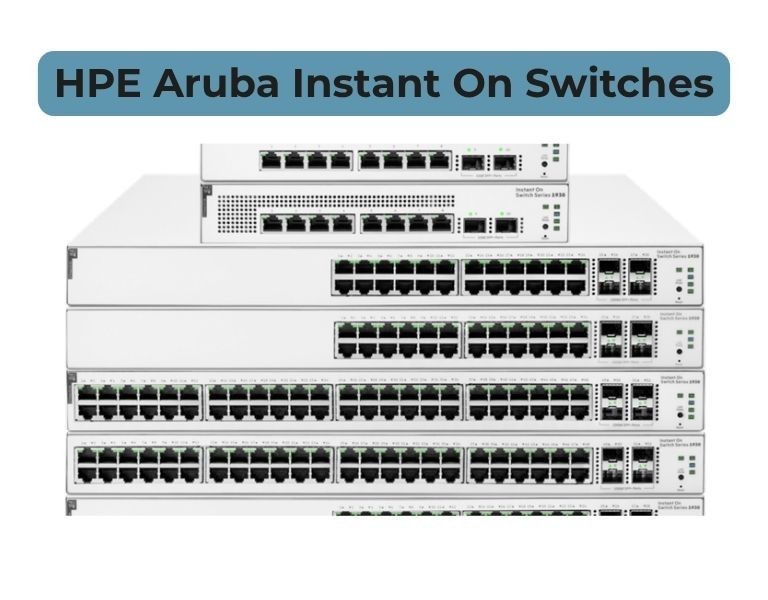
If you’re evaluating HPE Aruba Instant On switches for a small business or branch network, the real question is straightforward: do these switches deliver the performance, simplicity, and value needed for modern SMB access networks?
Short answer — yes, they are a compelling choice for small offices, retail sites, and simple edge deployments. They are not designed for large enterprise environments or deep customization.
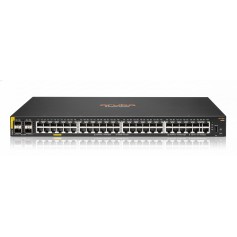
Instant On switches focus on plug‑and‑play ease, cloud and mobile management, and PoE support for wireless APs, phones, and IoT — all at affordable price points.
Quick Answer
Are HPE Aruba Instant On switches good for small business?
Yes. Aruba Instant On switches offer reliable access switching with easy setup and management, making them suitable for small business and branch offices.
They are not ideal for complex enterprise networks or advanced automation workflows.
Technical Breakdown
Performance
Instant On switches deliver solid Layer 2 performance for typical SMB workloads:
- Line‑rate switching on Gigabit and Multi‑Gigabit models
- Basic Layer 3 (static routing) on select models
- Stable for user traffic, VoIP, and wireless AP backhaul
These are access switches designed for:
- Edge connectivity
- Wi‑Fi AP aggregation
- Desk access ports
They are not built for:
- Core or aggregation layers
- Advanced routing (OSPF, BGP)
Deployment Use
Best fit for:
- Small offices (10–200 users)
- Retail and hospitality networks
- Branch locations of larger enterprises
Not ideal for:
- Large campus networks
- Data center environments
- Automation‑centric IT operations
Management & Automation
Instant On switches are managed via:
- Cloud dashboard
- Mobile app (iOS/Android)
- Zero‑touch provisioning
Management priorities for SMB:
- Easy initial setup
- Remote oversight
- Basic monitoring and alerts
Unlike AOS‑CX enterprise switches:
- No CLI for deep configuration
- Limited scripting and automation
Power over Ethernet (PoE) Support
Many Instant On models include PoE:
- Up to PoE+ on access ports
- Sufficient for Wi‑Fi APs, phones, cameras
This matters for SMB because:
- Wireless infrastructure often needs edge PoE ports
- No separate PoE injectors required
Security & Network Control
Standard features include:
- VLAN segmentation
- Access control lists (ACLs)
- Basic storm control
They provide:
- Segmentation for guest vs internal traffic
- Protection from layer‑2 broadcast issues
Note:
- Advanced enterprise security (802.1X with ClearPass) is not supported
Comparison Table
| Feature | Instant On Switches | Aruba CX 6200 |
|---|
| Performance | Good (access) | Higher |
| Reliability | Strong for SMB | Stronger |
| Management | Cloud only | Cloud + CLI |
| Scalability | Limited | Better |
| Power / Efficiency | Efficient | More PoE options |
| Warranty | Standard | Limited lifetime |
| Price Range | Low–Mid | Mid |
| Best Use Case | SMB access/branch | Enterprise access |
| Business Size | Small business | SMB to Enterprise |
Pros and Cons
Pros
- Simple setup and management
- Cloud/mobile control dashboard
- Good PoE support for SMB edge devices
- Affordable price points
Cons
- Limited advanced features
- No CLI or deep automation
- Not suitable for enterprise core or aggregation
Aruba CX 6200 (Enterprise Alternative)
Pros
- More performant hardware
- CLI + cloud + API management
- Better stacking and scalability
Cons
- Higher upfront cost
- More complexity than SMB needs
Procurement Insight
When to Buy Instant On
- Small business with limited IT resources
- Need quick deployment and easy management
- PoE support needed for APs and phones
- Branch office rollout without enterprise complexity
When NOT to Buy
- Large enterprise or campus network
- You need advanced routing or automation
- You require deep CLI control and scripting
Budget vs Performance
Instant On hits the right balance for small business:
- Lower CapEx compared to enterprise switches
- Fewer features than enterprise, but enough for SMB workloads
- Very low management overhead
Long-Term Cost (TCO)
For small businesses:
- Reduced IT staffing cost
- Cloud management reduces field visits
- No complex licensing
Compared to enterprise switches:
- Lower long‑term cost
- Lower feature ceiling
Real-World Use Cases
1. Small Office (10–50 Users)
- Wi‑Fi AP backhaul + desktop access
Outcome: Reliable plug‑and‑play deployment
2. Retail Store Network
- PoE for POS and cameras
Outcome: Stable edge connectivity without IT overhead
3. Professional Services Office
- Mixed user devices + VoIP phones
Outcome: Easy management and segmentation
Final Recommendation
Choose Aruba Instant On if:
- You are a small business with modest network needs
- You need PoE for APs and phones
- You want cloud and mobile management
Avoid Instant On if:
- You are building enterprise networks
- You need advanced enterprise features
- You rely on CLI and automation workflows













Comments (0)
No comment