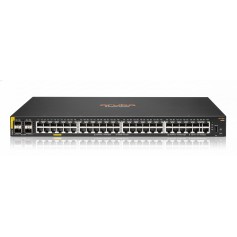
HPE Aruba CX Switches Review: Worth It?
Real-world Aruba CX review for enterprise network buyers
Introduction
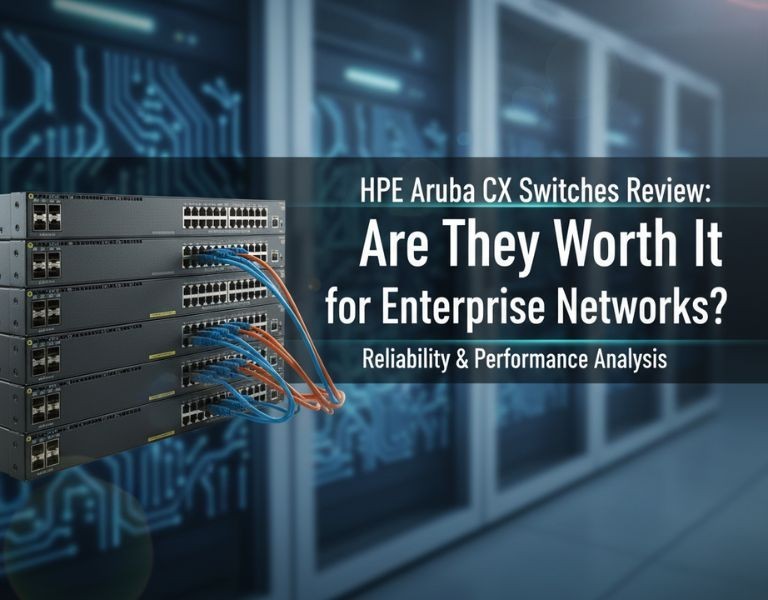
If you're evaluating HPE Aruba CX switches for an enterprise network, the decision comes down to reliability, automation, and long-term cost. In real deployments, Aruba CX is a strong alternative to Cisco—especially for campus and mid-to-large enterprise environments. It delivers modern OS architecture, API-driven automation, and competitive pricing. However, software maturity and ecosystem depth still lag behind Cisco in some critical use cases, which matters for large-scale or highly sensitive networks.
Quick Answer
Are Aruba CX switches worth it for enterprise networks?
Yes, Aruba CX switches are worth it for most enterprise and campus deployments due to strong performance, automation, and lower cost.
They are less ideal for ultra-critical environments where maximum stability and ecosystem integration are required.
Technical Breakdown
Operating System & Architecture
Aruba CX runs on AOS-CX, a microservices-based, database-driven OS.
- Centralized state management reduces config mismatch
- REST APIs available for automation
- Built-in Network Analytics Engine (NAE)
Practical impact:
- Easier automation across multiple sites
- Faster troubleshooting with real-time telemetry
Performance & Scalability
- Supports 1G to 400G depending on model (CX 6000–9300 series)
- High port density for aggregation and core layers
- Supports stacking (VSF) and multi-chassis (VSX)
Practical impact:
- Suitable for campus core, aggregation, and ToR deployments
- No performance limitation in typical enterprise workloads
Automation & Management
- Cloud-based management via Aruba Central
- API-first design for scripting and orchestration
- Real-time monitoring and alerts
Practical impact:
- Reduced manual configuration effort
- Faster rollout in multi-branch environments
Reliability & Stability
- Stable hardware platform
- Software still evolving compared to Cisco
Observed issues:
- Occasional GUI inconsistencies
- Firmware updates required to address bugs
Practical impact:
- Reliable for most deployments
- Requires proper version control and patching strategy
Security & Segmentation
- Role-based access control
- Integration with ClearPass
- Dynamic segmentation for user/device policies
Practical impact:
- Suitable for enterprise security frameworks
- Works well in BYOD and IoT-heavy environments
Comparison Table (Aruba CX vs Cisco Catalyst)
| Feature | Aruba CX Switches | Cisco Catalyst Switches |
|---|
| Performance | High (up to 400G) | High |
| Reliability | Strong (some SW issues) | Very mature |
| Management | API + Cloud | CLI + DNA Center |
| Scalability | High (VSX, stacking) | Very high |
| Power / Efficiency | Efficient | Moderate |
| Warranty | Competitive | Enterprise-grade |
| Price Range | Mid (better value) | High |
| Best Use Case | Campus, DC | Enterprise core |
| Business Size | SMB to Enterprise | Enterprise / Large orgs |
Pros and Cons
Aruba CX Switches
Pros
- Modern OS architecture (AOS-CX)
- Strong automation and API support
- Better pricing compared to Cisco
- Suitable for campus and hybrid deployments
Cons
- Software maturity still improving
- Smaller ecosystem vs Cisco
- Learning curve for teams used to traditional CLI
Cisco Catalyst (Reference)
Pros
- Proven stability
- Deep ecosystem integration
- Strong enterprise support
Cons
- Higher cost (hardware and licensing)
- More complex management stack
Procurement Insight
When to Buy Aruba CX
- Building a new campus or upgrading enterprise LAN
- Need automation and centralized management
- Budget constraints vs Cisco
When NOT to Buy
- Highly critical environments with zero tolerance for instability
- Heavy dependency on Cisco ecosystem tools
- Teams not ready for API-driven networking
Cost Perspective (TCO)
- Lower upfront cost vs Cisco
- More flexible licensing
- Reduced operational cost if automation is used
Key point:
- Cost advantage is strongest when automation is actually implemented
Real-World Use Cases
1. 50–200 User Enterprise Office
- CX 6200 / 6300
- VLANs, PoE, wireless integration
Use case fit: strong
2. Multi-Branch Retail Network
- Centralized deployment via Aruba Central
- Template-based provisioning
Use case fit: efficient rollout
3. Data Center ToR Deployment
- CX 8320 / 8360
- High throughput switching
Use case fit: good, but not top-tier for ultra-low latency
Final Recommendation
Choose Aruba CX if:
- You want modern, API-driven networking
- You need enterprise features at lower cost
- Your deployment is campus, enterprise LAN, or hybrid
Avoid Aruba CX if:
- You require maximum stability with long-proven platforms
- Your environment is tightly integrated with Cisco
Bottom line:
Aruba CX is a strong enterprise platform with modern capabilities, best suited for organizations willing to adopt automation and optimize cost without sacrificing core performance.











Comments (0)
No comment