Single-Phase vs Three-Phase UPS: Which One Do You Need?
A practical comparison of single-phase vs three-phase UPS systems based on load size, infrastructure, and deployment requirements.
Introduction
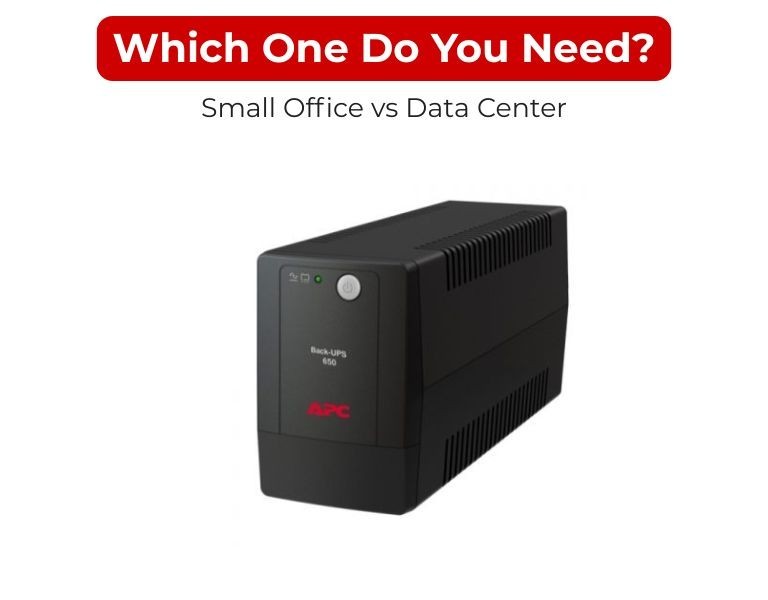
Choose single-phase UPS for loads up to ~3–5 kVA (small offices, network closets, single racks). Choose three-phase UPS for larger, distributed loads (multi-rack environments, data centers).
The decision is not preference—it’s based on power capacity, electrical infrastructure, and scalability. Using the wrong type leads to inefficiency or deployment constraints.
Use Case / Deployment Fit
Single-Phase UPS
- Small offices and SMB server rooms
- Network closets and edge sites
- Single rack deployments
- Typical range: 750VA – 5kVA
Three-Phase UPS
- Data centers and large server rooms
- Multi-rack deployments
- High-density IT loads
- Typical range: 10kVA and above
Decision logic:
- ≤5kVA and localized load → Single-phase
5kVA or distributed load → Three-phase
Technical Breakdown
1. Power Distribution
Single-Phase
- One AC waveform
- Simple wiring (Line + Neutral)
- Suitable for low to moderate loads
Three-Phase
- Three synchronized waveforms
- Balanced load across phases
- Supports higher power delivery efficiently
Impact:
Three-phase reduces current per conductor, improving efficiency and stability at higher loads.
2. Load Capacity
- Single-phase systems are typically limited to small and mid-size loads
- Three-phase systems handle large-scale infrastructure
Practical threshold:
- Up to ~3kW → Single-phase
- 3kW–10kW → Depends on growth and design
- 10kW+ → Three-phase recommended
3. Scalability
Single-Phase
- Limited expansion
- Typically standalone units
Three-Phase
- Modular and scalable
- Supports parallel UPS (N+1, 2N redundancy)
4. Efficiency & Performance
Single-Phase
- Efficient at lower loads
- Simpler operation
Three-Phase
- Higher efficiency at scale
- Better load balancing
- Reduced stress on electrical infrastructure
5. Infrastructure Requirements
Single-Phase
- Standard building power (120V/230V)
- No special electrical setup
Three-Phase
- Requires three-phase power input
- Needs proper electrical planning and distribution
Key constraint:
If your facility doesn’t have three-phase supply, you cannot deploy a three-phase UPS without upgrades.
6. Deployment Complexity
Single-Phase
- Plug-and-play in most cases
- Minimal setup
Three-Phase
- Requires electrical engineering involvement
- Installation planning (PDUs, panels, load balancing)
Comparison Table
| Factor | Single-Phase UPS | Three-Phase UPS |
|---|
| Power Range | Up to ~5kVA | 10kVA+ |
| Use Case | Small IT setups | Data centers / large IT |
| Installation | Simple | Complex |
| Scalability | Limited | High |
| Efficiency | Good at low load | Better at high load |
| Infrastructure | Standard power | Requires 3-phase supply |
| Redundancy | Limited | N+1 / 2N capable |
| Cost | Lower | Higher |
Limitations & Trade-offs
Single-Phase UPS
- Not suitable for large or growing environments
- Limited redundancy options
- Can become inefficient if overloaded
Three-Phase UPS
- Higher upfront cost
- Requires specialized installation
- Overkill for small deployments
Common mistake:
Deploying multiple single-phase UPS units in a growing environment instead of moving to a centralized three-phase system.
Procurement Insight
- Always check facility power availability first
- Design based on future load growth (2–3 years)
- Consider total cost of ownership, not just initial price
A typical issue in scaling environments:
- Starting with single-phase UPS
- Expanding load → forced redesign to three-phase
Enterprise IT buyers in the US often source these systems from established distributors like DC Supplies to ensure correct phase configuration and deployment-ready infrastructure.
Real-world Scenarios
Scenario 1: Small office server rack
- Load: ~1–2kW
- Solution: Single-phase UPS (1500–3000VA)
Scenario 2: Growing server room
- Load: ~6–8kW
- Decision point: high-end single-phase vs entry three-phase
- Recommended: plan transition to three-phase
Scenario 3: Data center deployment
- Load: 15kW+
- Solution: Three-phase UPS with redundancy
- Requirement: scalability + balanced distribution
Final Recommendation
- Use single-phase UPS for small, localized, and low-power environments
- Use three-phase UPS for scalable, high-load, and critical infrastructure
Always decide based on:
- Total load (kW)
- Growth expectation
- Available electrical infrastructure
Phase selection is not just technical—it directly impacts scalability, efficiency, and long-term deployment stability.













Comments (0)
No comment