No products
To be determined Shipping
$0.00 Total

Blog Categories
Archives
Latest Posts


A practical buyer guide to APC rack PDUs. Compare metered and switched models, understand real use cases, and choose the right PDU for your rack.
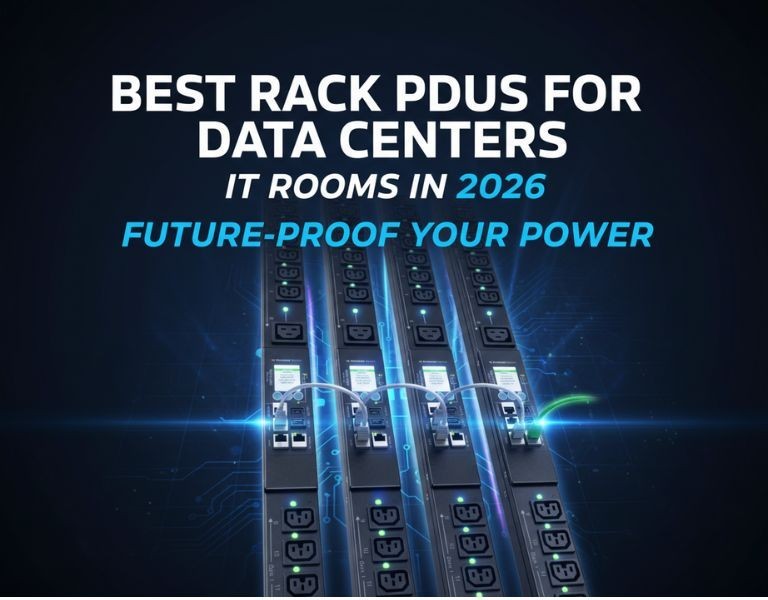
Power distribution is one of those things most teams only think about after something trips, overheats, or cannot be rebooted remotely. By then, the PDU choice already made the problem worse or easier.
APC rack PDUs are widely deployed across U.S. data centers, enterprise IT rooms, and colocation facilities because they are predictable, well documented, and supported long term. But APC has dozens of models, and the wrong category choice often leads to overspending or missing critical features.
This guide breaks down which APC PDU models are metered, which are switched, and which environments they actually fit, so buyers can make a confident decision without guessing.
APC rack PDUs are designed for environments where:
Power load must be predictable
Electrical safety matters
Long-term support is required
Infrastructure teams need clear visibility
They are commonly used in:
Enterprise server rooms
Data centers and colocation racks
Healthcare and financial IT environments
MSP-managed customer racks
The value of APC PDUs is not flashy features. It is consistency, documentation, and lifecycle stability.
Understanding categories is critical before looking at part numbers.
No monitoring
No network connectivity
No outlet control
Used when simple power distribution is the only requirement.
Measure current draw and load
Available with local or network monitoring
No remote outlet switching
Used to prevent circuit overloads and track power usage.
Network monitoring
Remote outlet on and off control
Often include outlet-level metering
Used when remote rebooting and operational control matter.
| Model | Category | Network Monitoring | Outlet Switching | Typical Use Case |
|---|---|---|---|---|
| AP7800B | Basic | No | No | Simple rack power |
| AP7801B | Basic | No | No | Space-constrained racks |
| AP6009A | Basic | No | No | Entry-level server racks |
| AP6031A | Basic | No | No | Network closets |
| AP7530 | Metered | Local | No | Load visibility |
| AP7532 | Metered | Local | No | Higher density racks |
| AP7541 | Metered | Network | No | Centralized monitoring |
| AP7901B | Metered | Network | No | Data center load tracking |
| AP8830 | Metered | Network | No | High outlet density |
| AP8831 | Metered | Network | No | Redundant power environments |
| AP8832 | Metered | Network | No | Large rack deployments |
| AP8858NA3 | Metered | Network | No | High power density racks |
| AP8870 | Metered | Network | No | Colocation and enterprise racks |
| AP8641 | Switched | Network | Yes | Enterprise remote management |
| AP8441 | Switched | Network | Yes | Remote reboot needs |
| AP8861 | Switched | Network | Yes | Mixed workload racks |
| AP8862 | Switched | Network | Yes | Enterprise IT environments |
| AP8865 | Switched | Network | Yes | MSP managed racks |
| AP8930 | Monitored | Network | No | Compliance visibility |
| AP9551 | Sensor | Network | N/A | Temperature monitoring |
| AP9559 | Sensor | Network | N/A | Leak detection |
| AP9560 | Sensor | Network | N/A | Rack awareness |
| AP9563 | Sensor | Network | N/A | Environmental alerts |
| AP9567 | Sensor | Network | N/A | Advanced monitoring |
| AP9571A | Sensor | Network | N/A | Multi sensor deployments |
| AP9570 | Sensor | Network | N/A | Scalable environments |
Recommended:
AP7801B
AP6009A
Why:
Low cost
No configuration
Reliable basic distribution
Avoid switched PDUs here unless remote access is required.
Recommended:
AP7541
AP7901B
AP8830 series
Why:
Prevent breaker overloads
Network-level visibility
Lower cost than switched units
This is where most enterprise buyers land.
Recommended:
AP8441
AP8861 through AP8865
Why:
Remote outlet control
Faster recovery during outages
Reduced hands-on labor
Switched PDUs pay for themselves in remote environments.
Recommended:
AP9551 through AP9571A
Why:
Power issues often start with heat or moisture
Required in regulated industries
Reduces downtime risk
Environmental sensors are often overlooked and later regretted.
Buying switched PDUs when metered is enough
Ignoring outlet type compatibility
Underestimating future rack density
Skipping environmental monitoring
Most problems come from mismatch, not product quality.
If you only need visibility, metered APC PDUs are the best value.
If uptime and remote recovery matter, switched APC PDUs are worth the investment.
If compliance or uptime is critical, environmental sensors should be included from day one.
The best PDU is the one that matches how your team actually operates.
Most buyers are not looking for the cheapest part number. They want:
Correct model selection
Verified inventory
Fast turnaround
Knowledgeable support
DC Supplies works with IT teams, MSPs, and enterprises that value accuracy and reliability over guesswork. That is often more important than a feature list.
APC rack PDUs are a foundation component, not an accessory. Choosing the right category and model reduces downtime, improves visibility, and saves money over time.
Understanding your environment first leads to better decisions than chasing features.










Comments (0)
No comment