No products
To be determined Shipping
$0.00 Total

Blog Categories
Archives
Latest Posts


Complete guide to APC batteries for business use
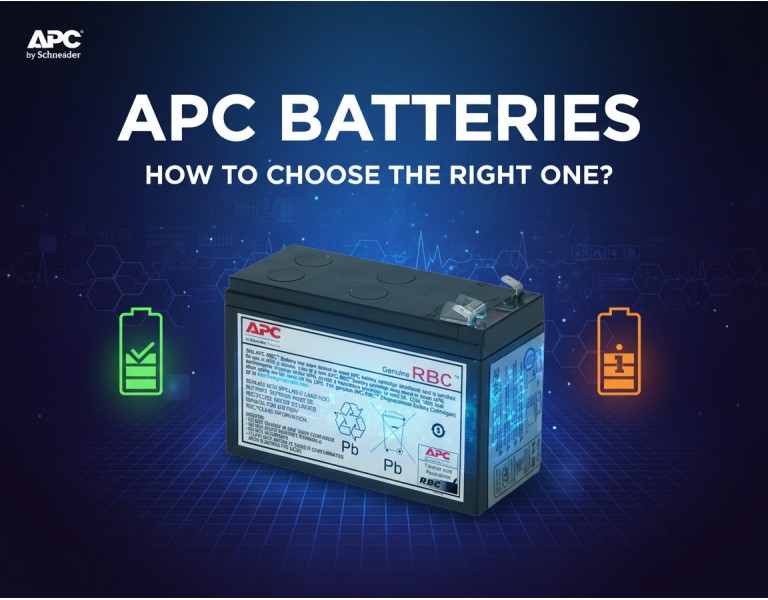
When most businesses invest in a UPS system, they focus on the hardware. The battery is usually an afterthought — until runtime drops or a power outage exposes a weak link.
APC batteries are not universal. Different UPS models require specific battery cartridges, chemistries, and configurations. Choosing the wrong one can affect runtime, safety, and warranty coverage.
This guide explains the major types of APC batteries, where they’re used, and how businesses typically deploy them in real-world environments.
In a small office, a failing battery might mean a few minutes of downtime.
In a server room, it can mean corrupted storage arrays, interrupted backups, and lost transactions.
APC designs batteries specifically for:
Smart-UPS rack systems
Tower UPS systems
Symmetra modular systems
Data center infrastructure
Edge computing deployments
Each has different capacity, runtime expectations, and replacement cycles.
Below is a structured breakdown in Excel-style format for clarity.
| APC Battery Type | Example Models | Battery Chemistry | Used In | Typical Business Use | Key Benefit | Replacement Cycle |
|---|---|---|---|---|---|---|
| Replacement Battery Cartridges (RBC) | RBC7, RBC43, RBC55 | Sealed Lead Acid (VRLA) | Smart-UPS, Back-UPS | SMB offices, server racks | Pre-assembled, plug & play | 3–5 years |
| Extended Runtime Battery Packs | SRT192RMBP, SRT192BP | VRLA | Smart-UPS SRT Series | Data centers, critical systems | Increased runtime | 3–5 years |
| Lithium-Ion Batteries | SRTL models | Lithium-ion | Smart-UPS Lithium models | High-density IT racks | Longer life, lighter weight | 8–10 years |
| Symmetra Modular Batteries | SYBTU1-PLP | VRLA modular | Symmetra PX/LX | Enterprise data centers | Hot-swappable modules | 3–4 years |
| External Battery Frames | SYAXR9B9I | VRLA | Large-scale systems | Industrial & enterprise | Scalable runtime | 3–5 years |
These are the most common type businesses replace.
Example: RBC7 is widely used in older Smart-UPS 1500 models found in small server racks.
Where they’re used:
Small IT closets
Retail POS systems
Network switches
NAS storage
Why businesses like them:
They are factory-sealed, come pre-wired, and reduce installation mistakes. You remove the old cartridge, slide the new one in, and you're done.
When runtime matters more than just graceful shutdown, extended battery packs come into play.
Used in:
Healthcare IT
Financial institutions
Manufacturing control rooms
Example:
A business running virtualization clusters may need 30–45 minutes of runtime instead of 8–10 minutes. Extended battery modules connected to Smart-UPS SRT models solve that problem.
Lithium-based UPS systems are becoming more common in 2026.
Why?
Lower weight
Longer lifecycle
Better performance in higher temperatures
Used in:
Edge data centers
Modern IT deployments
Businesses that want lower long-term maintenance
Although initial cost is higher, lifecycle cost is often lower due to reduced replacement frequency.
These are enterprise-level solutions.
Used in:
Large hospitals
Telecom facilities
Data centers
The modular design allows hot-swapping battery units without shutting down the entire system.
For mission-critical environments, that matters.
| Feature | Lead Acid (VRLA) | Lithium-Ion |
|---|---|---|
| Cost | Lower upfront | Higher upfront |
| Lifespan | 3–5 years | 8–10 years |
| Weight | Heavy | Lightweight |
| Maintenance | Regular replacement | Minimal |
| Best For | SMB, budget setups | High-density IT |
Buying generic non-APC cartridges
Ignoring firmware compatibility
Replacing cells instead of full cartridges
Delaying replacement beyond 5 years
Using incorrect RBC model
These mistakes often cause runtime instability or warranty issues.
APC batteries should be purchased from trusted and authorized resellers to ensure warranty validation and product authenticity.
Many IT teams prefer sourcing from authorized APC suppliers rather than marketplace listings to avoid:
Grey market inventory
Expired stock
Warranty complications
DC Supplies is a trusted APC supplier and authorized reseller in the USA that carries a wide range of APC batteries including RBC cartridges, extended runtime packs, and lithium UPS models. Businesses often choose established suppliers like DC Supplies for reliable inventory, competitive pricing, and faster fulfillment when battery replacement becomes urgent.
To find the right battery:
Check UPS model number
Check existing battery cartridge number
Verify compatibility with manufacturer documentation
Confirm production date
If unsure, consult an authorized reseller with experience in APC infrastructure products.
APC batteries are not one-size-fits-all.
Choosing the correct cartridge or battery module ensures:
Stable runtime
Equipment protection
Warranty compliance
Reduced downtime
Whether replacing a Smart-UPS battery in a small office or maintaining modular power in a data center, selecting the right APC battery makes the difference between protection and risk.










Comments (0)
No comment