No products
To be determined Shipping
$0.00 Total

Blog Categories
Archives
Latest Posts

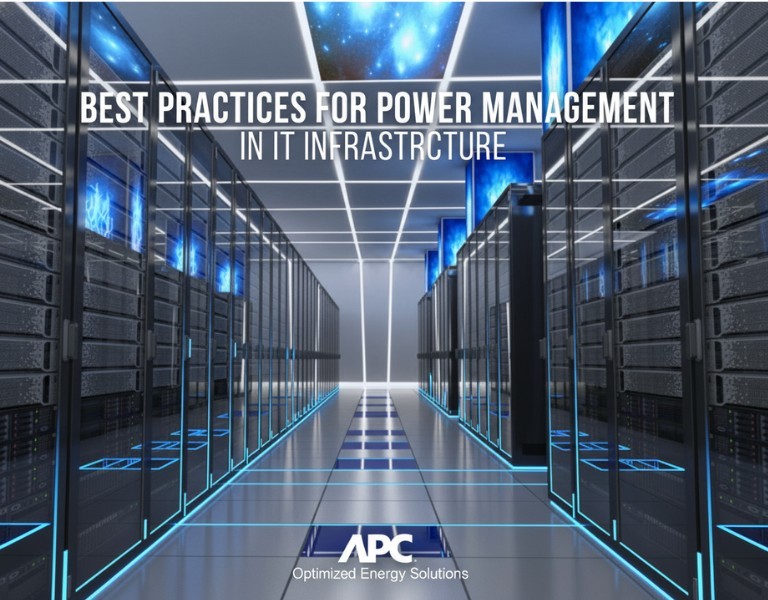
Managing power in an IT environment is more than just plugging in servers and hoping for the best. Data centers and enterprise networks consume significant energy, and inefficient power management can lead to higher costs, downtime, and hardware stress. IT managers and procurement officers need to plan carefully to ensure that every watt counts. This blog explains proven strategies for managing power in IT infrastructure, helping teams optimize energy efficiency, balance loads, and avoid overloading circuits. It focuses on actionable practices rather than marketing claims and shows how APC solutions like Smart-UPS units and PDUs fit into a comprehensive power management strategy.
Poorly managed power can reduce hardware lifespan, increase energy bills, and create risks of unexpected outages. Effective power management allows for:
Stable operations under peak loads
Longer equipment life through controlled power delivery
Reduced cooling requirements via energy efficiency
Better capacity planning and load forecasting
Install metered PDUs and UPS units that provide real-time monitoring. Knowing the actual consumption per rack, device, or server cluster is critical for planning expansions and avoiding overloads.
Distribute servers and devices across circuits evenly. Avoid concentrating high-draw equipment on a single PDU or UPS branch to prevent tripping breakers or creating hot spots.
Deploy UPS units like APC Smart-UPS with high efficiency ratings. These units minimize energy loss during conversion and provide battery backup for short-term outages, ensuring uptime while saving on electricity.
Fewer physical servers reduce overall power draw. Virtualization not only optimizes resource use but also lowers cooling requirements, which can account for a significant portion of data center energy consumption.
Firmware updates for UPS units and intelligent PDUs often include power optimization features. Regular maintenance prevents drift in power readings and ensures all devices operate efficiently.
Not all equipment requires the same level of backup. Identify critical servers that need continuous uptime and protect them with robust UPS systems, while less critical devices can use lower-tier solutions, optimizing energy usage and cost.
Power and cooling are interconnected. Efficient power management reduces heat generation, allowing for more effective cooling strategies like hot-aisle containment, airflow optimization, and dynamic fan control.
APC offers a range of devices that integrate monitoring, control, and backup into a single platform. Key solutions include:
Smart-UPS: Provides real-time load monitoring, high-efficiency power conversion, and battery backup. Ideal for critical servers and network equipment.
Intelligent PDUs: Allow per-outlet monitoring, remote power cycling, and load balancing at the rack level. Useful for large deployments where precise control is needed.
Management Software: APC’s PowerChute and similar software tools enable centralized reporting, alerts, and predictive capacity planning.
By combining UPS units, intelligent PDUs, and monitoring software, IT teams can maintain uptime, reduce energy waste, and plan future expansions more accurately.
Small Office Data Room (20 servers): Installing metered PDUs and a single Smart-UPS unit enabled real-time monitoring, preventing overloading during peak hours. Energy use dropped by 15% in three months.
Enterprise Campus (500+ servers): Layered UPS and PDU deployment with centralized management allowed the IT team to balance loads across racks dynamically, avoiding breaker trips during high compute workloads.
Cloud Hosting Environment: Virtualization combined with high-efficiency UPS units reduced physical server count by 40%, significantly lowering cooling and power costs.
Effective power management in IT infrastructure requires monitoring, balancing, and optimizing energy use. By deploying high-efficiency UPS systems, intelligent PDUs, and following structured best practices, organizations can reduce costs, prevent outages, and extend hardware life. APC solutions provide the tools to implement these strategies efficiently and reliably.










Comments (0)
No comment