No products
To be determined Shipping
$0.00 Total

Blog Categories
Archives
Latest Posts

A practical comparison of cheap network switches vs genuine HPE hardware, focusing on reliability, performance, and long-term value for growing businesses.
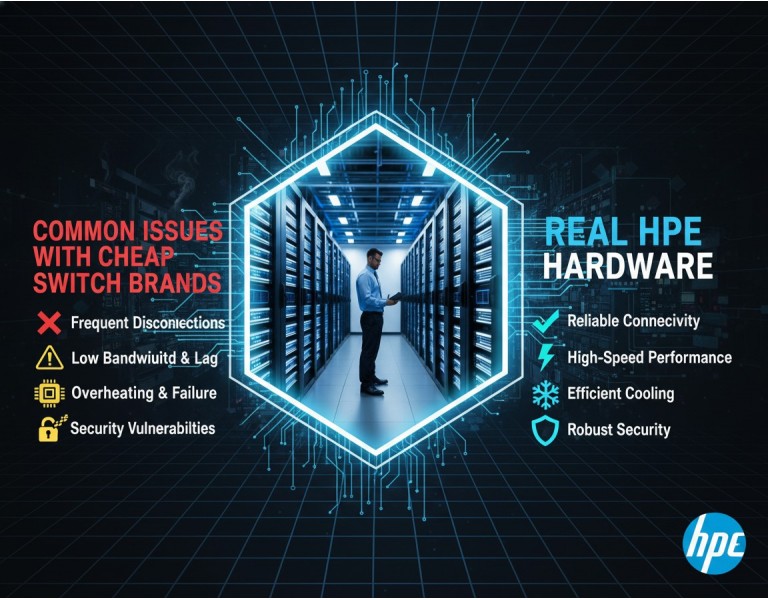
Every growing business eventually hits the same wall: the network starts lagging, VoIP calls break up, or file transfers crawl—all because the switch at the core wasn’t built for real workloads. Cheap, no-name switches look attractive at first because they cost less, but they often introduce hidden problems that show up exactly when the office is busiest.
This guide breaks down the most common issues seen in budget switch brands and explains why businesses that rely on uptime choose HHP-grade hardware instead. The goal isn’t to sell you a brand—it’s to help you avoid downtime, bottlenecks, and costs that usually come later.
Many low-cost switches perform fine with light traffic, but once multiple users run cloud apps, file sharing, or VoIP, the throughput drops significantly. This creates bottlenecks that slow daily operations.
Budget switches often advertise PoE support but fail to deliver stable power during peak use. This leads to IP phones rebooting, cameras freezing, or APs dropping connections.
Cheap L2 “managed” switches often only provide basic settings. Missing features like VLAN isolation, DHCP snooping, or proper QoS make them unsuitable for offices that rely on VoIP or multi-department segmentation.
Low-cost switches tend to run hotter due to weak cooling design. This accelerates component damage and increases failure rates—especially in warm server rooms or ceiling mounts.
The components used in budget switches simply aren’t built for 24/7 duty cycles. Power supply failures and dead ports are common within 12–24 months, forcing replacements earlier than expected.
Cheap vendors rarely maintain firmware updates. Missing patches can introduce vulnerabilities and create compliance problems, especially in finance, retail, and healthcare environments.
HPE switches are designed for sustained traffic, low latency, and stable throughput even under heavy load. This matters when multiple users rely on cloud tools and internal servers simultaneously.
HPE’s PoE budgets are accurate and stable. IP phones, cameras, and APs run without unexpected dropouts, helping ensure smooth communication and security coverage.
Even SMB-focused HPE models include proper VLAN control, ACLs, QoS, DHCP guarding, and strong L2/L3 capabilities. These features help maintain a cleaner, more secure network.
HPE designs its switches with optimized airflow and higher-quality components that handle long-term operating temperatures without degradation.
Businesses routinely run HPE switches for 6–10 years with minimal issues. Fewer failures mean less downtime and fewer emergency replacement purchases.
HPE actively maintains security updates, ensuring your network stays protected as threats evolve. This is a major advantage for compliance-focused industries.
If your office handles VoIP, cloud apps, shared storage, or anything uptime-sensitive, cheap switches often cost more in the long run due to failures and downtime. For very small or temporary setups, budget brands may be acceptable. But for growing businesses, investing in HPE hardware gives you reliability, long-term support, and real network stability—especially when user traffic increases.
Small Office (20 users)
A cheap switch caused random VoIP resets during peak hours. Replacing it with an HPE 24-port PoE switch eliminated the issue immediately due to stable PoE and proper QoS.
Retail Store Chain
Budget switches powering IP cameras led to outages and recording gaps. Switching to HPE provided stable power and secure VLAN separation for POS systems.
Growing Agency (40 users)
Intermittent slowness and file transfer delays were traced back to low-end switching. Upgrading to HPE improved throughput and provided room for VLAN segmentation as the team expanded.
Cheap switches may seem cost-effective at first, but they introduce risks—from poor performance and unstable PoE to early hardware failure. HPE hardware delivers stability, manageability, and long-term value, especially for growing businesses that depend on consistent uptime and secure connectivity.
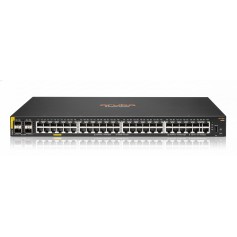
Upgrade your network with reliable HPE hardware from DC Supplies. Avoid downtime, unstable PoE, and performance issues caused by cheap switches. We provide trusted, business-ready HPE solutions designed to support growing workloads and long-term reliability. Explore our HPE switch lineup and build a network your business can depend on.










Comments (0)
No comment