No products
To be determined Shipping
$0.00 Total

Blog Categories
Archives
Latest Posts


If your office relies heavily on VoIP calls, video meetings, or cloud applications, you’ve probably dealt with choppy audio, dropped packets, or jitter during peak hours. Most of the time, the switch is the culprit—not the ISP. VoIP traffic is extremely sensitive to delay, and unmanaged switches simply can’t prioritize or shape real-time traffic.
This guide explains why HPE managed switches consistently outperform basic models in VoIP-heavy and high-traffic environments, helping you choose hardware that keeps communication stable and predictable.
VoIP calls require:
Low latency
Consistent throughput
Zero packet loss
Proper traffic prioritization
Busy offices running cloud apps, file transfers, storage access, and Wi-Fi all at once generate competing traffic. Without the right switch, VoIP packets get buried, and call quality collapses. HPE managed switches solve this by allowing precise control over traffic flow.
HPE switches support advanced Quality of Service queues that push VoIP packets ahead of general data traffic. This keeps call audio stable even during heavy file transfers or backup jobs.
HPE designs its switch architecture around efficiency. VoIP packets move through the switch with minimal delay, protecting call quality in busy offices.
Many HPE managed switches automatically detect IP phones and apply correct voice VLANs, PoE settings, and QoS rules—no manual provisioning needed.
Keeping VoIP traffic isolated reduces jitter, improves security, and stabilizes performance. HPE’s interface-level VLAN controls make this easy.
Offices deploying dozens of phones and APs benefit from reliable PoE budgets. HPE’s PoE/PoE+ delivery is stable, predictable, and easier to monitor.
HPE switches come with user-friendly management tools that let admins:
Monitor packet loss
Track VoIP quality
Prioritize traffic
Detect bottlenecks
This helps IT teams fix issues before they impact calls.
VoIP phones go offline if the switch fails. HPE hardware is built for long lifecycle operation, stable runtimes, and predictable performance during peak usage.
HPE managed switches are the right choice for:
Call centers
Offices with 20–200 VoIP handsets
Customer support teams
Sales floors
Hybrid workplaces with heavy video conferencing
SMBs using on-prem VoIP systems
Businesses with high-volume file transfers + VoIP
If your office handles voice, Wi-Fi, security cameras, and storage traffic together, HPE’s managed switching provides the control needed to keep everything running smoothly.
Consistent call audio requires strict traffic shaping. HPE switches assign VoIP packets the highest priority, preventing issues during peak hours.
Voice VLANs and LLDP-MED detect phones automatically, reducing deployment time and minimizing configuration errors.
Advanced QoS and low-latency switching improve both VoIP and video collaboration quality, even when multiple departments work simultaneously.
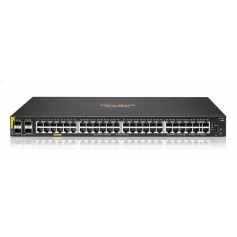
Offices relying on VoIP simply need more traffic control than basic switches can provide. HPE managed switches deliver stable voice quality, better prioritization, stronger PoE, and advanced monitoring capabilities—making them the best fit for high-traffic and communication-heavy environments.
Upgrade your network with HPE managed switches from DC Supplies and give your VoIP system the stability it deserves. Whether you’re running a busy call center or a growing office with heavy traffic, we provide reliable, high-performance switching solutions that keep calls clear and operations smooth. Explore our curated HPE options and build a network that scales with your business.










Comments (0)
No comment