No products
To be determined Shipping
$0.00 Total

Blog Categories
Archives
Latest Posts

A practical, engineer-level comparison of HPE Aruba and Netgear switches to help businesses choose the right platform for performance, budget, and long-term growth.
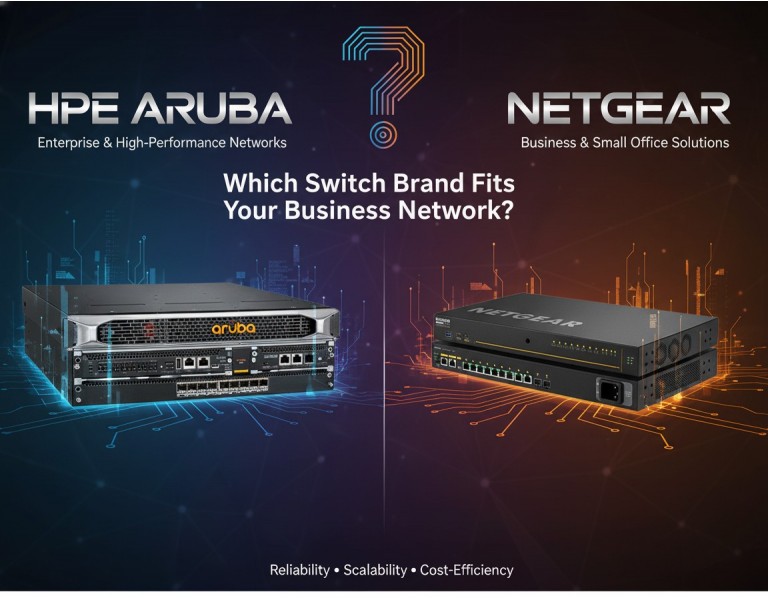
Most business networks start small — a couple of Wi-Fi access points, a basic switch from years ago, and a growing list of devices fighting for bandwidth. Eventually you hit issues: VoIP calls break up, VLANs get messy, or your switches simply can’t keep up with new workloads. When that happens, HPE Aruba and Netgear are usually the two brands on the shortlist. The challenge is deciding which one actually fits your environment rather than buying more hardware than you need. This guide breaks down the real differences so you can choose with confidence.
HPE Aruba
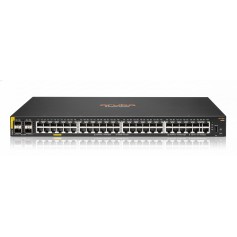
Built for long-term reliability and structured networks. Aruba switches run a stable, unified operating system that scales well from small offices to full campus deployments. They excel in environments needing strong VLAN segmentation, routing features, and predictable behavior under heavy load.
Netgear
Designed for simplicity, lower upfront cost, and ease of deployment. Netgear’s SMB and ProSAFE lines work well for small offices, retail, and teams that don’t need advanced routing or automation. The web UI is straightforward, the switches are budget-friendly, and they’re easy to drop into an existing network.
| Feature | HPE Aruba | Netgear |
|---|---|---|
| Performance | High throughput, enterprise ASICs | Solid SMB performance, varies by model |
| Reliability | Excellent uptime, long-term hardware stability | Reliable for SMB loads |
| Management | Consistent OS, strong CLI, automation options | Simple web GUI, limited advanced controls |
| Power Efficiency | Efficient under high port use | Lower draw on small fanless units |
| Warranty & Support | Limited lifetime hardware with enterprise support options | Limited lifetime hardware on many models |
| Price Range | Mid-range to enterprise | Budget to mid-range |
| Best Use Case | Multi-VLAN, VoIP-heavy, growing networks | Small offices, retail, startups |
| Target Business Size | 50–500 users | 5–75 users |
Pros:
Consistent operating system across models
Strong routing and segmentation features
Better visibility and diagnostics
Designed for continuous high-load operation
Cons:
Higher upfront cost
Requires admin skill for full capability
Overkill for small, simple networks
Pros:
Easy web-based management
Budget-friendly for SMBs
Quiet or fanless options
Quick, simple deployment
Cons:
Limited advanced routing
Feature set varies widely between models
Less automation and monitoring depth
If your business runs VoIP, internal file servers, multiple VLANs, or plans to expand, HPE Aruba provides long-term stability and features that grow with you. For small offices, basic cloud workloads, and simple networks that just need to “plug in and work,” Netgear offers better value without unnecessary complexity. Choose performance when your traffic demands it; save money when your network is straightforward.
Small office with 20–30 users: Light traffic and cloud tools only. Netgear fits well and keeps cost low.
Growing company with multiple departments: Needs segmentation, QoS, and routing. Aruba is the stronger long-term option.
Retail locations with remote management: Netgear’s simplicity works unless you need centralized enterprise control, where Aruba becomes the better fit.
Netgear is ideal for small, simple networks that prioritize cost and ease of use. HPE Aruba is the better choice for environments with heavier traffic, multiple VLANs, or long-term growth. Align the switch platform with your workload, not just the price tag.
Need help choosing between HPE Aruba and Netgear for your business network? DC Supplies can match the right switch series to your workload, budget, and growth plan. Whether you’re upgrading a small office or building a more resilient network with VLANs and VoIP, our team guides you toward hardware that fits your environment without overspending. Contact DC Supplies to get expert assistance and reliable, authentic equipment for your next upgrade.










Comments (0)
No comment