No products
To be determined Shipping
$0.00 Total

Blog Categories
Archives
Latest Posts

A practical, engineer-level breakdown of how HPE Aruba access switches improve stability, reduce downtime, and keep office networks running smoothly.

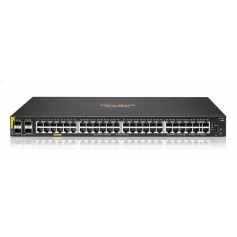
Most offices hit the same wall as soon as user count grows: random slowdowns, VoIP jitter, printers dropping offline, or Wi-Fi clients bouncing between APs. In many cases the issue isn’t the ISP — it’s the switching layer quietly struggling under load. Choosing the right access switch matters because this is the foundation every device relies on. This guide explains how HPE Aruba access switches improve day-to-day stability, what makes them different, and when they’re the right fit for your environment.
ArubaOS-CX and Aruba ASICs prioritize deterministic forwarding, meaning fewer microbursts and significantly reduced packet loss during peak traffic. Offices running VoIP, Teams, Zoom, or large file transfers see smoother operation because the switch enforces consistent queuing and buffer behavior.
Aruba’s VSF stacking gives you single-control-plane redundancy without the complexity of chassis systems. If one switch fails, the stack keeps forwarding traffic with almost no user-visible downtime. For small and mid-size offices, this alone eliminates a common single point of failure.
Dynamic segmentation, MAC authentication, role-based access, and built-in DHCP snooping help prevent misconfigurations and rogue devices from impacting production VLANs. Many office outages originate from accidental loops or unauthorized switches — Aruba shuts that risk down early.
Central gives you per-port analytics, client behavior history, and fault correlation. Instead of guessing why a user keeps disconnecting, you see the port’s error count, signal issues, or negotiation problems within seconds. Faster troubleshooting leads to far more stable day-to-day operation.
Aruba access switches support OSPF, static routing, and VRRP on the same platform used for access aggregation. This avoids messy multi-vendor edge designs and reduces configuration drift, which is one of the biggest causes of office instability.
VSF stacking for redundancy
Non-blocking architecture for consistent throughput
Intelligent queuing for latency-sensitive traffic
Strong loop prevention and dynamic segmentation
Centralized monitoring through Aruba Central
Power-efficient PoE for APs and VoIP stability
If your office depends heavily on cloud applications, VoIP, or collaborative tools where stability is more important than raw port count, Aruba’s consistency and built-in safeguards make it an excellent fit. Environments with multiple VLANs, mixed wireless and wired loads, or remote management needs also benefit from Aruba’s visibility tools and clean failover behavior.
35-user legal office: Needs stable VoIP, printer reliability, and PoE for APs. Aruba VSF prevents downtime and keeps voice calls clean.
Design firm with 50 workstations: Heavy file movement to NAS. Aruba’s non-blocking fabric removes microburst issues that slow transfers.
Multi-floor corporate office: Needs centralized control and reliable PoE for APs across floors. Aruba Central simplifies monitoring and reduces troubleshooting time.
Aruba access switches deliver stability through deterministic forwarding, strong redundancy, and real-time visibility tools that help prevent small issues from becoming outages. For most modern offices relying on cloud apps and VoIP, Aruba provides a more consistent, predictable network experience with far less maintenance overhead.
For advice on choosing the right Aruba switch for your office size, layout, and performance needs, reach out to DC Supplies. We help businesses build stable, scalable networks with hardware that fits their actual workload, not unnecessary upsells. Whether you're upgrading PoE, improving Wi-Fi backhaul, or designing redundancy, our team can guide you to the right solution.










Comments (0)
No comment