No products
To be determined Shipping
$0.00 Total

Blog Categories
Archives
Latest Posts

A practical guide to how APC UPS, PDUs, and cooling systems support disaster recovery, reduce downtime, and protect critical IT during emergencies.
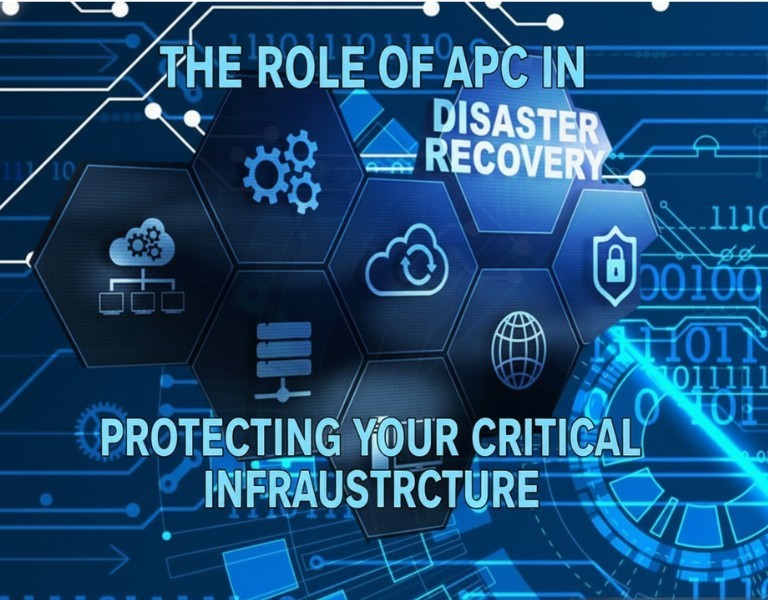
When something goes wrong — a sudden power outage, a tripped breaker, a cooling failure, or even a localized disaster — the first question any IT team asks is: “Did the infrastructure hold?”
If your UPS doesn’t carry the load long enough, if PDUs aren’t distributing power cleanly, or if cooling drops and servers overheat, recovery becomes exponentially harder. Disaster recovery isn’t only about backups and failover sites — it’s about keeping on-prem systems alive long enough to failover safely, or to ride out short-term outages entirely.
This article breaks down how APC’s power and cooling ecosystem fits into disaster recovery (DR) and business continuity planning, and what real-world problems these systems solve.
APC provides several core infrastructure components that directly support DR readiness:
UPS (Uninterruptible Power Supply) — protects against power loss and voltage irregularities, buys time for failover procedures, and prevents abrupt shutdowns.
Intelligent PDUs (rack PDUs / switched PDUs) — ensure controlled, monitored power distribution and remote reboot capabilities.
Cooling Systems (rack-mounted, in-row, room-based) — maintain safe operating temperatures during electrical failures or partial HVAC outages.
Environmental sensors & DCIM integration — provide real-time visibility into power, thermal conditions, and device status.
Together, these systems reduce the likelihood that a power or cooling event becomes a full-scale outage — the core goal of disaster recovery.
APC UPS systems stabilize and sustain power long enough for:
orderly shutdowns
hypervisor/live migration
generator start-up
failover to alternate sites
protection of storage arrays during write cycles
Line-interactive and online double-conversion UPS models also clean up unstable power (sags, surges, brownouts), which is crucial during storms or utility switching events.
Why it matters for DR:
Unclean or interrupted power is one of the top causes of data corruption and equipment failure. A proper UPS configuration is the difference between a recoverable failover and a catastrophic crash.
APC’s switched and metered PDUs add functionality that becomes essential during emergency conditions:
remote outlet control
detailed per-outlet metering (spotting overloads early)
load balancing during generator operation
remote rebooting of locked systems
visibility into power consumption for DR simulations
Why it matters for DR:
If your team can’t physically access the site, remote power control keeps critical services online and allows targeted resets without risking the rest of the rack.
During outages or partial utility failure, HVAC often becomes unstable. APC cooling solutions — such as in-row units, rack-mounted cooling, and containment systems — maintain safe temperatures long enough to:
prevent thermal shutdowns
avoid equipment damage
maintain server performance during elevated workload
give generators or backup cooling time to start
allow DR processes to complete before overheating becomes a threat
Why it matters for DR:
Hardware can survive a short power loss — but it won’t survive 10–15 minutes of rising temperatures inside a sealed data room.
Environmental monitoring (power, temperature, humidity, leakage, smoke) combined with APC’s management tools allows:
real-time alerting when a disaster begins
early detection of unusual load or thermal drift
remote diagnostics before technicians arrive
trend analysis for DR planning
validation of failover and power-transition procedures
Why it matters for DR:
Visibility is everything. You can’t recover from a problem you don’t see coming.
| Component | Disaster Recovery Function |
|---|---|
| UPS | Provides clean backup power, protects against surges, supports orderly shutdowns and failover. |
| Switched PDUs | Remote control of equipment, load balancing, rebooting systems without onsite access. |
| Metered PDUs | Monitors real-time power usage and detects overloads before failure occurs. |
| In-Row / Rack Cooling | Maintains safe temperatures during outages or generator transitions. |
| Room Cooling | Supports larger environments with coordinated thermal management. |
| Sensors & Monitoring | Environmental alerts, power fault detection, remote diagnostics. |
Pros
Highly reliable and widely deployed in enterprise
Strong monitoring and network management support
Available in sizes from small racks to full-room protection
Double-conversion options for critical loads
Cons
Higher-end models require periodic battery and capacitor replacement
Initial investment can be significant for full-room redundancy
Pros
Excellent remote monitoring and per-outlet control
Helps prevent overload during generator operation
Supports remote DR operations without onsite staff
Cons
Requires network connectivity to deliver full value
Advanced features add cost vs. basic power strips
Pros
Keeps racks alive during HVAC failures or power transitions
Scalable for micro-sites or full data halls
Works well with containment and modular designs
Cons
Some models require planning for power or chilled-water feeds
Maintenance (filters, sensors) must be scheduled
Small and Mid-Size Businesses:
UPS + basic monitored PDU is usually enough to ride through outages long enough for safe shutdown or generator start. Add a small rack cooling solution if the room has inconsistent HVAC.
Enterprise Data Centers:
Go with online double-conversion UPS, redundant PDUs, and in-row cooling for high-density racks. Integrate monitoring into your DCIM platform to support automated DR workflows.
Edge / Remote Sites:
Use integrated micro-data-center designs with UPS, PDUs, and cooling combined. This allows local survivability even when staff cannot reach the site.
If your site relies on cloud apps, VoIP, or remote workers, keeping the core rack powered and cool for even 5–10 minutes can prevent major outages — that’s where APC hardware shines.
A 6-rack server room runs on APC online UPS units. The UPS holds the load for 12 minutes — enough for the generator to start and stabilize. No servers crash, and VoIP stays online.
A primary HVAC unit fails. APC in-row cooling maintains safe inlet temperatures, preventing thermal shutdown while technicians repair the rooftop system.
A telecom branch switch fails. APC’s switched PDU allows remote reboot of the hardware without dispatching a technician, restoring service in minutes.
APC UPS filters the spike before it hits storage arrays, preventing a RAID rebuild and avoiding several hours of degraded performance.
APC’s UPS, PDU, and cooling systems play a direct, practical role in disaster recovery by reducing the risk of abrupt failures, keeping hardware alive during transitions, and enabling remote management when on-site access isn’t possible. Disaster recovery isn’t just about backups — it’s about giving your infrastructure the time and stability it needs to execute those plans. APC provides the power, thermal, and visibility tools required to keep critical systems running when everything else goes wrong.










Comments (0)
No comment