No products
To be determined Shipping
$0.00 Total

Blog Categories
Archives
Latest Posts

Understand how to calculate PoE wattage for clinics and labs. Get guidance on device needs, power budgeting, and reliable switch selection.
Running a clinic or laboratory comes with unique networking challenges. You have IP cameras monitoring hallways, VoIP phones for staff, wireless access points for patient devices, and possibly specialized medical devices that require Power over Ethernet (PoE). If your switch doesn’t supply enough wattage, devices may fail, networks can become unstable, or you might face frequent resets. This blog walks you through how to calculate PoE wattage requirements, plan for future expansion, and pick the right switches for small, medium, and large healthcare environments without overspending.
PoE allows devices to receive both data and power over a single Ethernet cable. In medical and lab environments, this reduces cable clutter, ensures clean setups in sensitive areas, and supports devices that must remain powered 24/7. Clinics often use:
IP cameras for patient safety and security
VoIP phones for seamless communication
Wireless access points for staff and patient devices
Point-of-care devices, sensors, or lab analyzers
Each device draws a specific wattage. Calculating the total required PoE wattage ensures your switches can handle peak loads without risking downtime.
| Device Type | Typical PoE Wattage | Notes |
|---|---|---|
| IP Cameras (standard 1080p) | 5–15 W | PTZ cameras may need 20–30 W |
| VoIP Phones | 5–10 W | Depends on phone features and display |
| Wireless Access Points (Wi-Fi 6) | 12–30 W | High-density APs may peak higher |
| Point-of-Care Devices/Sensors | 7–15 W | Depends on manufacturer specs |
| Lab Analyzers or Imaging Devices | 25–60 W | Only some devices support PoE+ or UPoE |
List all PoE devices: Count cameras, phones, APs, and any PoE-capable lab equipment.
Check device wattage: Use manufacturer specifications for accurate per-port wattage.
Add a safety margin: Add 20–30% overhead for peak usage or future expansion.
Check switch budget: Make sure your switch can supply total wattage across all ports.
Example:
A small clinic with 10 IP cameras (10 W each), 15 VoIP phones (7 W each), and 5 APs (20 W each) would need:
Cameras: 10 × 10 W = 100 W
Phones: 15 × 7 W = 105 W
APs: 5 × 20 W = 100 W
Subtotal: 305 W
Add 25% safety margin: 305 × 1.25 ≈ 381 W
A switch providing at least 400 W PoE budget would be ideal.
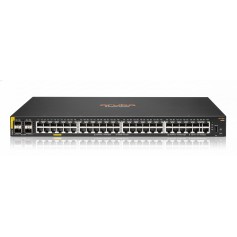
Small clinics (≤50 devices): PoE+ switch with 370–600 W budget
Medium clinics/labs (50–150 devices): Modular PoE+ or UPoE switches with 600–1200 W
Large labs or multi-floor hospitals: Stackable, Layer-3 PoE++ switches with 1200–2400 W
Key considerations:
Number of PoE ports and total wattage
Port speeds (1G vs 2.5G/10G) for high-bandwidth devices
Redundant power supplies for 24/7 reliability
Remote management for monitoring and troubleshooting
25-user diagnostic lab: 8 IP cameras, 20 VoIP phones, 5 APs. Total PoE need ~400 W. A 24-port PoE+ switch with 500 W budget suffices.
100-user outpatient clinic: 20 cameras, 50 phones, 10 APs. Total PoE need ~1,050 W. Requires modular PoE+ switch with dual PSU for reliability.
Research lab with imaging devices: 10 lab analyzers (PoE++ capable), 15 cameras, 30 APs. Total PoE need ~2,200 W. Stackable UPoE switches recommended.
If your clinic primarily uses IP cameras, VoIP phones, and standard APs, PoE+ switches with a 25–30% overhead are sufficient. For labs with heavy imaging or specialized devices, UPoE or PoE++ switches with modular power and redundancy ensure uninterrupted operations. Always plan for device growth and consider energy-efficient models to reduce heat and power costs.
Clinics and labs require careful PoE planning to ensure devices run reliably. By listing devices, calculating total wattage, adding a safety margin, and selecting switches with sufficient PoE budget, you can prevent downtime, support future expansion, and maintain a stable network environment.
Ensure your clinic or lab runs smoothly with the right PoE switches. DC Supplies offers expert advice, verified PoE switches, and reliable power budgeting solutions tailored to medical and laboratory environments. Whether you need PoE+, UPoE, or modular switches, we help you match devices to power capacity, ensure redundancy, and plan for growth. Get the right switch today and keep your network devices powered without downtime.










Comments (0)
No comment