Close

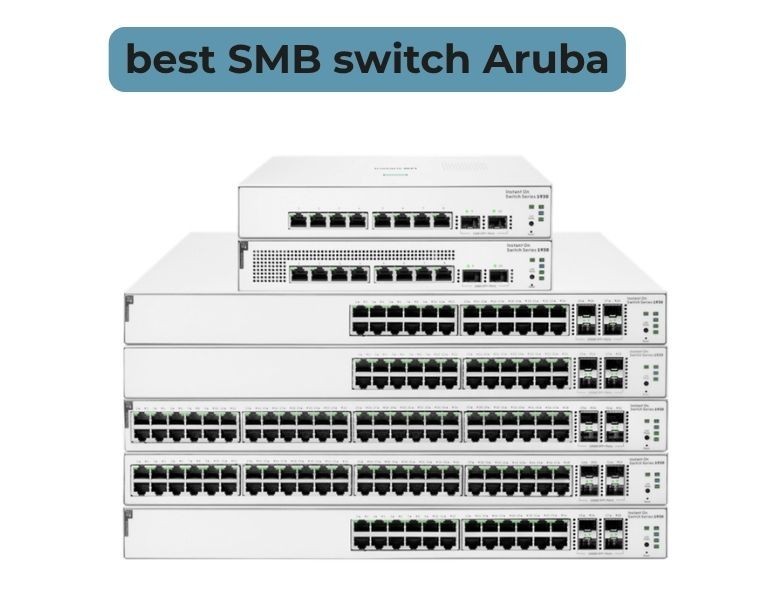
Best HPE Switch for Small Business in 2026
Posted on: Apr 1, 2026 | Author: Justin | Categories: Switches, HPE

Best HPE Switch for Small Business in 2026

Best HPE Switch for Small Business in 2026

Introduction

If you're selecting an HPE Aruba switch for a small business in 2026, the decision is straightforward: choose from the CX 6000, 6100, or 6200 depending on scale and Layer 3 needs. These switches run AOS-CX, which is now the standard platform across Aruba. The real difference is not branding—it’s whether you need basic Layer 2 access, PoE capacity, or routing at the edge. For most SMB environments (25–100 users), overbuying is common and unnecessary.

Which one is best for small business?

For most SMB networks, Aruba CX 6000 is the best balance of cost and capability.
Move to CX 6100 or 6200 only if you need Layer 3 or scaling beyond a single site.

Technical Breakdown

Aruba CX 6000 (Best fit for most SMBs)

  • Layer 2 access switch with limited Layer 3 (static routing)
  • Up to 740W PoE budget for APs, cameras, VoIP
  • AOS-CX OS (same as enterprise models)
  • Fanless options for quiet office environments

Where it fits:

  • Offices (10–100 users)
  • Retail stores
  • Small branch networks

Reality:

  • Enough performance for daily workloads
  • Simple deployment, minimal overhead
  • No need for higher models unless routing is required

Aruba CX 6100 (When you need basic Layer 3)

  • Entry Layer 3 capabilities (static + limited routing)
  • Same AOS-CX platform
  • Better for segmented networks

Where it fits:

  • SMB with VLAN segmentation
  • Growing businesses with multiple departments

Reality:

  • Slightly higher cost
  • Useful when traffic needs to stay local

Aruba CX 6200 (For scaling SMB or multi-site)

  • Full Layer 3 support
  • VSF stacking for scalability
  • Higher throughput and redundancy

Where it fits:

  • Multi-floor offices
  • Multi-branch SMBs
  • Aggregation layer

Reality:

  • Overkill for small single-office setups
  • Good long-term investment if expansion is planned

Product Comparison Table

FeatureAruba CX 6000 SwitchAruba CX 6100 SwitchAruba CX 6200 Switch
Performance Entry-level Mid High
Layer Support L2 + static routing L2/L3 (basic) Full L3
Scalability Limited Moderate High (stacking)
PoE Capacity Up to 740W High High
Management AOS-CX AOS-CX AOS-CX
Power Efficiency High High Moderate
Price Range $ $$ $$$
Best Use Case Small office Growing SMB Multi-site SMB
Business Size 10–100 users 50–200 users 100+ users

Pros and Cons

Aruba CX 6000

Pros

  • Best price-to-performance for SMB
  • Same OS as enterprise switches
  • Quiet and easy to deploy

Cons

  • No advanced Layer 3
  • Limited scalability

Aruba CX 6100

Pros

  • Adds basic routing
  • Good for segmented networks

Cons

  • Still limited compared to higher CX models
  • Slight cost jump

Aruba CX 6200

Pros

  • Full enterprise-grade features
  • Stacking and redundancy

Cons

  • Overkill for small setups
  • Higher cost

Procurement Insight

  • Buy CX 6000 if your network is flat or lightly segmented—this covers 80% of SMB use cases.
  • Choose CX 6100 if you’re introducing VLAN-based segmentation and want routing at the access layer.
  • Invest in CX 6200 only if you expect growth (multi-floor, multiple switches, redundancy requirements).

Avoid older Aruba 2530/2540—even if cheaper. They run legacy OS and will increase operational overhead long-term.

If you're sourcing Aruba switches in the US, suppliers like DC Supplies typically stock CX models with better availability than legacy lines, especially for PoE variants.

Real-World Use Cases

Office (25–50 users)

  • CX 6000 with PoE
  • Supports Wi-Fi APs, IP phones, cameras

Multi-branch business

  • CX 6100 at branches
  • Basic routing reduces dependency on central firewall

Growing company / multi-floor office

  • CX 6200 stack
  • Centralized switching with redundancy

Final Recommendation

Choose Aruba CX 6000 if you want the most cost-effective and practical SMB switch.
Choose CX 6100 if your network needs segmentation and basic routing.
Choose CX 6200 only if you are scaling beyond a single-site small business.

Avoid overspending—most small businesses do not need Layer 3 at the switch level.
Comments (0)

No comment

Add a comment

You need to Login to add comments.

Close