No products
To be determined Shipping
$0.00 Total

Blog Categories
Archives
Latest Posts


If your business is still running on legacy switches, you’re likely dealing with slow performance, limited visibility, and increasing failure rates. As workloads shift to cloud apps, VoIP, and high-bandwidth services, old hardware simply can’t keep up. Modernizing to HPE Aruba CX gives you stability, automation, and better control over your network. This guide walks you through when to upgrade, how to plan the migration, and what to expect during the transition.
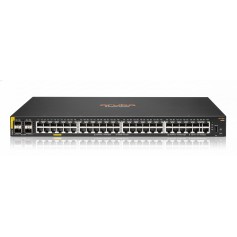
HPE Aruba CX is designed for today’s hybrid environments. It offers consistent architecture from access to core, real-time analytics, strong security features, and simple lifecycle management. For growing businesses, CX switches provide the performance and automation needed to handle more users, more devices, and heavier traffic without increasing operational complexity.
Before planning a migration, map your existing environment:
Current switch models and firmware
Port density, uplink speed, and traffic patterns
Power requirements and PoE usage
Local services depending on the switch
Redundancy and failure points
This helps identify whether you need access-layer upgrades, core refresh, or full-stack modernization.
Aruba CX has multiple series suited for different roles:
CX 6100: Access layer for small offices needing reliable 1G connectivity
CX 6200: Access and aggregation with stacking and advanced features
CX 6300: Enterprise access with Layer 3, VSF stacking, and high performance
CX 8360: Core and aggregation for growing environments
CX 8400: Modular core for high-availability networks
Pick based on port count, uplink needs, PoE requirements, and future scalability.
A clean migration avoids downtime and disruption. A typical plan includes:
Replacing access switches first to remove bottlenecks
Migrating distribution or aggregation next
Upgrading the core last to avoid traffic impact
Running a pilot phase with a small user group
Preparing fallback options in case rollback is required
Plan cutovers during low-traffic windows to minimize user impact.
HPE Aruba CX supports modern configuration workflows:
Template-based provisioning
API-driven automation
Centralized management for multiple sites
VSF stacking to simplify topology changes
Generate configurations before deployment, test them in a lab or virtual environment, and validate VLANs, routing, ACLs, and PoE settings.
During migration:
Move user access cables gradually
Validate link speed, spanning tree, and uplinks
Test DHCP, DNS, and gateway reachability
Confirm PoE devices (phones, cameras, APs) power up correctly
Document changes in real time
Ensure redundancy paths are up before removing legacy hardware.
After migration, use Aruba’s monitoring capabilities to fine-tune your network:
Real-time analytics for performance bottlenecks
Automated anomaly detection
Firmware compliance checks
Traffic visibility to identify heavy users or misconfigurations
This ensures your network remains stable as your business grows.
If your team relies heavily on cloud tools, VoIP, conferencing, or Wi-Fi, moving to Aruba CX gives you a more stable and predictable network. Small businesses can start with CX 6100 or CX 6200, while mid-size offices or multi-floor setups benefit from CX 6300 and CX 8360 stacks. Avoid waiting for hardware failure—plan a phased upgrade to minimize downtime and take advantage of modern automation features.
Multisite Retail Company: Migrated access switches to CX 6100 for stable PoE and centralized management.
Growing Creative Agency: Upgraded to CX 6300 for high-speed file transfers and VoIP reliability.
Corporate Office (100+ Users): Implemented CX 8360 at aggregation to support heavy traffic and redundancy.
Migrating from legacy networking to HPE Aruba CX isn’t just an upgrade—it’s a move toward faster performance, better visibility, and long-term scalability. With proper planning, phased deployment, and the right CX models, your business gains a network ready to support future workloads and growth.
Modernize your network with DC Supplies’ full range of HPE Aruba CX solutions. Whether you’re replacing aging switches or planning a complete infrastructure refresh, we provide reliable hardware, expert guidance, and fast delivery to support your growth. Build a faster, smarter, and more scalable network with our trusted HPE offerings today.










Comments (0)
No comment