No products
To be determined Shipping
$0.00 Total

Blog Categories
Archives
Latest Posts
Understand Layer 2 and Layer 3 networking and the enterprise switches that provide them, from Cisco Catalyst and Juniper EX to Aruba CX and Arista.
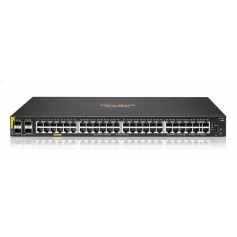
Layer 2 devices forward traffic inside a network using MAC addresses. Layer 3 devices route traffic between networks using IP addresses. Enterprise networks use Layer 2 switches at the access edge and Layer 3 switches at the distribution and core to connect VLANs and sites.
| Feature | Layer 2 switch | Layer 3 switch |
|---|---|---|
| Forwarding basis | MAC address | IP address and MAC address |
| VLANs | Yes | Yes, plus routing between VLANs |
| Routing protocols | No | Static, OSPF, BGP on many models |
| Typical place | Access layer | Distribution and core |
| Cost | Lower | Higher |
At the WAN edge, enterprises use routers or firewalls from Cisco, Juniper, Fortinet and Palo Alto Networks for site-to-site VPN, internet access and security.
Smaller sites often use a collapsed core, where one Layer 3 switch pair handles distribution and core together.
If you use several VLANs and want fast routing between them, yes. Otherwise a router or firewall can do it, at lower speed.
For internal routing, yes. For internet edge functions such as NAT and VPN, you still need a router or firewall.










Comments (0)
No comment