No products
To be determined Shipping
$0.00 Total

Blog Categories
Archives
Latest Posts


An honest 2026 APC Smart-UPS review with real-world business use cases and buying guidance from trusted suppliers.
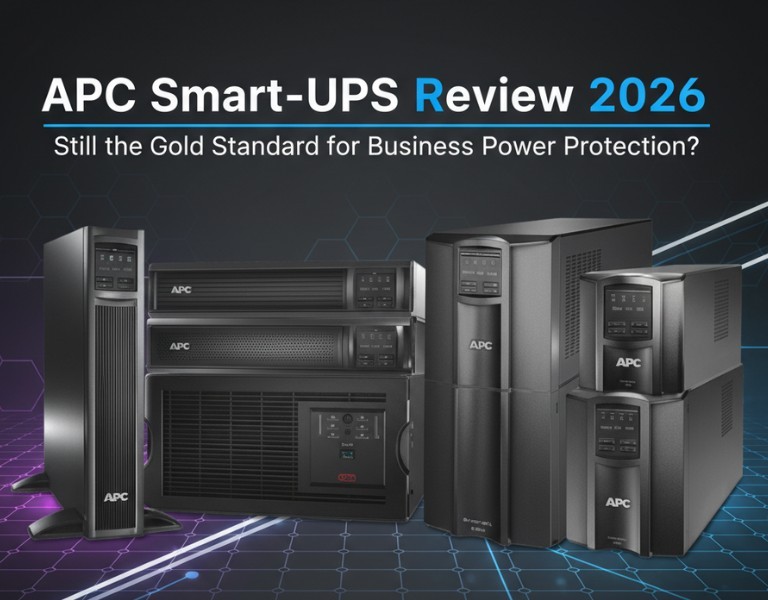
Power problems don’t announce themselves. One voltage dip, one unexpected outage, and suddenly your servers reboot, databases corrupt, or critical network equipment goes offline. In 2026, with businesses relying more than ever on always-on infrastructure, a reliable UPS is not optional — it’s insurance.
APC Smart-UPS has been a long-standing name in this space. But the real question is: does APC Smart-UPS still make sense in 2026, especially when cheaper alternatives are flooding the market?
This review breaks it down honestly — performance, reliability, value, and where APC Smart-UPS truly shines (and where it doesn’t).
APC Smart-UPS is designed primarily for:
Small to mid-size businesses
Data centers & server rooms
Network closets
Healthcare, finance, and retail IT environments
Mission-critical office infrastructure
This is not a consumer UPS. It’s built for environments where uptime matters more than saving a few dollars.
If your business runs:
Servers
Network switches
Firewalls
Storage systems
POS or medical systems
APC Smart-UPS is aimed squarely at you.
APC Smart-UPS units use line-interactive technology with AVR (Automatic Voltage Regulation). This means they correct voltage fluctuations without switching to battery, which:
Extends battery life
Protects sensitive electronics
Handles unstable power grids well
In real-world use, this matters far more than just backup runtime.
Battery failures are the #1 cause of UPS downtime.
APC’s battery management remains one of the best in the industry:
Predictable battery replacement cycles
Clear battery health alerts
Widely available replacement batteries
In 2026, many low-cost UPS brands still struggle here.
Modern APC Smart-UPS models support:
LCD status displays
USB / Network monitoring
APC SmartConnect (cloud monitoring on select models)
For IT teams managing multiple locations, this visibility saves time and prevents surprises.
APC Smart-UPS is available in:
Tower models for offices
2U / rackmount models for server racks
This flexibility makes it easy to standardize power protection across different environments.
Let’s be realistic.
APC Smart-UPS is not meant to run your servers for hours. Its purpose is to:
Provide clean, stable power
Bridge short outages
Allow safe shutdown during long outages
Typical real-world performance:
5–15 minutes runtime under moderate load
Enough time for generator startup or graceful shutdown
That’s exactly what a business-grade UPS should do.
This is important.
APC Smart-UPS is not ideal if:
You want the cheapest possible option
You only need backup for a home PC
You expect hours of runtime without external batteries
You’re paying for reliability, support, and consistency, not gimmicks.
| Factor | APC Smart-UPS | Budget UPS Brands |
|---|---|---|
| Build Quality | Enterprise-grade | Consumer-grade |
| Voltage Regulation | Excellent | Limited / None |
| Battery Predictability | High | Inconsistent |
| Monitoring | Advanced | Basic |
| Long-Term Cost | Lower | Often higher (failures) |
Many businesses switch to APC after experiencing failures with cheaper units. That pattern hasn’t changed in 2026.
UPS products are often mishandled, improperly stored, or sold without proper support when bought from unreliable sources.
Working with a specialized IT hardware supplier makes a difference.
Companies like DC Supplies focus specifically on enterprise IT equipment, offering:
Genuine APC Smart-UPS units
Business-oriented pricing
Proper product handling
Support for B2B buyers
For businesses, this reduces risk compared to random marketplace sellers.
Yes — if uptime matters to your business.
APC Smart-UPS remains one of the safest choices for:
SMBs
Growing IT environments
Mission-critical systems
It’s not the cheapest. It’s not flashy.
But it does what a UPS should do: protect your infrastructure without surprises.
In a world where downtime is more expensive than ever, that reliability still justifies the investment.










Comments (0)
No comment